
Flying Squirrel Control Services
When flying squirrels find their way into your attic or walls, they can cause costly damage and sleepless nights. At Evolved Wildlife Solutions, our professional pest control team provides safe, humane, and effective flying squirrel control to help keep your property and family pest free.
Why Choose Our Flying Squirrel Control Services
Professional, Experienced, and Dedicated
Our team combines expertise and hard work to protect your home or business with comprehensive pest control services.
Three reasons to choose Evolved Wildlife Solutions:
.png)
Local Pennsylvania Pest Control Experts
Our team knows the behavior of northern and southern flying squirrels common to our region, allowing us to deliver effective, tailored pest control services that work for Pennsylvania homes and businesses.
.png)
Comprehensive Inspection and Prevention Solutions
We go beyond basic flying squirrel control by providing a thorough inspection, sealing all entry points, and creating a personalized treatment plan for lasting pest prevention.
.png)
Commitment to Safety, Professionalism, and Satisfaction
From humane removal methods to unwavering customer care, our professional technicians are dedicated to your family’s safety and complete satisfaction, every step of the way.

Understanding Flying Squirrels in Pennsylvania
Flying squirrels, both the southern and northern species, are small, nocturnal animals that use folds of skin between their feet to glide from trees to your home. In fall and winter, they often seek warmth and shelter inside attics, walls, and insulation. While charming in nature, they can quickly become a pest problem—gnawing on wires, nesting in insulation, and leaving feces behind. As Pennsylvania pest control experts, we understand their behavior and biology to develop the most effective and ethical treatment plans.
Signs You Have a Flying Squirrel Problem
.png)
Scratching or Pattering Sounds in the Attic
If you hear movement at night, especially overhead, flying squirrels could be moving around your attic or walls.
.png)
Droppings, Odors, or Nests
Nests, feces, and strong odors of urine are clear indicators that squirrels have been present for quite some time.
.png)
Chewed Wires or Entry Points
Flying squirrels often chew into structures to create entry points or gather nest material, which can lead to fire hazards and structural damage.

Sightings Around the Roofline
You may notice these agile critters gliding between nearby trees and your house, especially at dusk.
Our Flying Squirrel Removal Process


Our Commitment to Safe and Compliant Practices
At Evolved Wildlife Solutions, we follow guidelines for the tools, equipment, and techniques we use. Our professional wildlife control team uses materials and exclusion devices that meet or exceed standards to ensure safe, compliant, and humane results for both your property and the animals involved.
Commonly Asked Questions
What are flying squirrels?
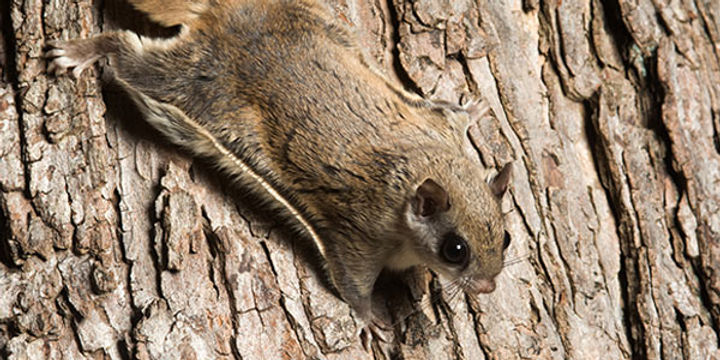
Flying squirrels are small, nocturnal squirrels that typically nest in small colonies of 5–20 individuals. They have large eyes (for night activity), extra skin between their front and back legs, and a flat tail that acts like a rudder as they glide (they don’t truly fly). They’re typically 8.5–10.5 inches long (including tail) with tan/brown/grey fur on top and lighter fur on their belly.
There are two species of flying squirrels in PA: the Northern flying squirrel (Glaucomys sabrinus) and the Southern flying squirrel (Glaucomys volans). The Northern species is endangered and typically found in older mixed conifer forests of Northern PA. The Southern flying squirrel is the species most commonly found in wooded areas throughout our region.
Their diet is primarily nuts and seeds but can include many other foods. Predators include owls, foxes, coyotes, and cats. They prefer older trees and typically nest in tree cavities or woodpecker holes, but they will enter structures if they find a suitable nesting site.
Why do flying squirrels enter homes in Pennsylvania?
Partly due to decreased habitat and increasing population size, they often seek nesting sites in structures. In suburban wooded habitat, these squirrels will glide from a tree and land on a roof, then explore until they find an opening—even as small as quarter-size—and establish nesting sites.
To a flying squirrel, your home can resemble a large tree cavity. They may nest in insulation, cache nuts and seeds, and cause damage from droppings and urine. Many people don’t realize flying squirrels are present until they hear them in the attic—or see one in the living space.
How do flying squirrels enter my home?
They can squeeze through openings as small as a quarter. Common entry points include roof vents, gaps in siding, and areas around chimneys or rooflines—especially where trees overhang the structure.
What areas of my home are most vulnerable to flying squirrel infestations?
Flying squirrels often glide from nearby trees and land on roof areas. Vulnerable areas commonly include construction gaps or damage on the roof, roof eaves/overhangs, soffits, roof corners, fascia, fan/air vents, and rooflines near gutters.
Are flying squirrels dangerous?
They aren’t aggressive, but they can carry parasites like fleas and ticks, and their chewing can create serious electrical risks.
Can flying squirrels cause structural damage or electrical issues?
Yes. If an infestation is historical or involves a greater number of individuals, droppings and urine can contribute to damage and decay affecting wood, insulation, drywall, plaster, and other building materials.
Although flying squirrels typically don’t chew as much as some other squirrel species (or rats and mice), they do have ever-growing incisors and may chew electrical wiring, which can create serious hazards.
Are flying squirrels known to carry diseases or parasites?
Flying squirrels can be associated with diseases and parasites. Possible diseases include sylvatic typhus, Salmonella, Lyme disease, tularemia, Histoplasmosis, and leptospirosis. They can also carry ticks and fleas that can affect humans and pets. Although possible, flying squirrels are not considered a significant carrier of rabies.
Can flying squirrels cause allergies or health problems for pets or humans?
Yes. Flying squirrel infestations can contribute to health and allergy issues for both humans and pets. Certain diseases may be transmitted through direct contact with the animals or indirect contact with droppings, urine, and ectoparasites. Allergic reactions and asthma can also be triggered in some cases.
What time of year are flying squirrels most active in Pennsylvania?
Flying squirrels are active all year long. They often enter structures as the weather cools in the fall, when homeowners may start hearing nocturnal activity in attics or walls. They commonly remain through winter and spring until the attic heats up, at which point they may temporarily move to cooler tree cavities or leaf/stick nests.
Do flying squirrels hibernate during the winter months?
No. The flying squirrel species found in Southeastern PA does not hibernate. However, they may show temporary inactivity during extreme weather (severe cold and snow), staying in the nest and feeding on cached nuts and seeds.
Is it safe to remove flying squirrels on my own?
DIY flying squirrel removal is possible, but it’s not recommended. Direct or indirect contact can expose you to disease risks, and proper PPE and safety equipment are important. Flying squirrels can use openings as small as a quarter, and incomplete repairs often lead to continued entry.
It’s typically best to have a professional wildlife control specialist handle the full remediation: inspection, exclusion/repair of primary and potential access points, removal, and any restoration recommendations.
How does Evolved Wildlife Solutions remove flying squirrels from a property?
We start with a thorough inspection. Upon arrival, we discuss the symptoms you’ve noticed, then inspect accessible attic areas for activity and damage. Exterior inspection includes evaluating surrounding habitat and checking the structure from ground level for activity, access points, and damage.
To complete a truly thorough exterior inspection, we use ladders to access roof areas and identify primary access points, secondary access points, and additional areas for preventative measures.
After the inspection, we review our findings with you and share photos of evidence and damage. We then provide a detailed remediation plan outlining exclusion to seal primary/secondary access points, additional preventative measures as needed, removal methods, and restoration recommendations if necessary. We aim to provide options that consider your budget while solving the problem the right way.
What methods do you use for humane flying squirrel removal?
Our flying squirrel removal methods are humane. We are licensed by the PA Game Commission and hold additional certifications for wildlife pest removal.
The most recognized methods for flying squirrel removal are one-way excluders or trapping and removal. In most cases, the best long-term approach is thorough exclusion—starting with secondary/potential access points and “pinching down” to the primary access point(s)—then installing one-way devices. After the appropriate time has passed for the squirrels to leave, the one-ways are removed and the final entry area is excluded/repaired.
What materials do you use to prevent flying squirrels from re-entering?
We use materials that are extremely difficult for flying squirrels and other wildlife to get through, including stainless or galvanized mesh, shredded stainless wildlife mesh, aluminum coil stock flashing, approved fasteners, and professional-grade caulks and sealants.
How do you ensure flying squirrels don’t come back after removal?
Our methods are proven through 25+ years of experience, strong attention to detail, continued training, and knowledge of wildlife habits. We also offer warranty renewal inspections and maintenance options if needed to support long-lasting results.
Do you provide warranties or guarantees on your flying squirrel control services?
Yes. In most cases, we guarantee our exclusion/repairs for 1 year, as long as the structure and exterior remain in good condition and are not damaged.
We also offer warranty renewal inspections to help ensure your investment lasts for many years. Many renewal inspections have demonstrated our past exclusion work lasting 15+ years and counting. These renewal inspections help confirm the materials remain sound and identify any new wear or damage that could allow wildlife to re-enter.
In rare cases, if an exterior area is significantly damaged, our exclusion may be a temporary repair until a qualified contractor completes larger repairs. We discuss these situations after the inspection and before work begins.
How long does removal take?
Most flying squirrel removal cases can be managed with same- or next-day service for an inspection, though larger infestations may take longer depending on the issue and entry points.
Can you provide same-day or emergency flying squirrel removal service?
Same-day service is sometimes possible—especially for an inspection or removal of a flying squirrel that has entered a living space. A full remediation project from inspection through complete exclusion is often completed within a week or two.
How much does professional flying squirrel removal cost in Pennsylvania?
This is one of the most common questions we receive. The honest answer is that it’s very difficult to estimate without a thorough inspection. Cost depends on factors such as the size and complexity of the structure, roof/fascia condition, severity of the infestation, and whether additional species are involved.
A minor issue may be a few hundred dollars, while more complex projects can be a couple thousand or more. We provide a detailed remediation plan and do our best to offer options and competitive pricing with superior results.
Do you offer free inspections or consultations?
We typically do not offer free inspections. A thorough flying squirrel/wildlife inspection often takes 1–2 hours, includes checking accessible attic and basement areas, and (most importantly) accessing roof areas with ladders to identify true entry points. In many cases, access points cannot be accurately identified from the ground.
Some companies may offer free inspections, but they are often not as thorough and may involve a sales-only visit.
Is flying squirrel removal covered by homeowners insurance?
Flying squirrel removal is not typically covered by homeowners insurance, but we recommend checking directly with your insurance company.
Can trimming trees or removing bird feeders help reduce flying squirrel activity?
Yes. Trimming trees can help reduce flying squirrel (and other wildlife) access. Flying squirrels can glide long distances—up to 300 feet—from a tree to a lower landing area. Reducing access and attractants can be a helpful part of prevention.
Do you provide flying squirrel control throughout Southeastern Pennsylvania?
Yes. Evolved Wildlife Solutions provides wildlife control and remediation services throughout Southeastern PA, serving suburbs around Philadelphia and all or parts of Berks, Lancaster, Chester, Montgomery, Delaware, and Bucks Counties.
Are your technicians licensed and trained in humane wildlife removal practices?
Yes. Our team brings advanced education and extensive field experience. We are licensed by the PA Game Commission, hold pesticide applicator certifications, are a licensed PA contractor, and maintain multiple certifications from the National Wildlife Control Operators Association. We also continue ongoing training to stay current with best practices and new research in wildlife control.
Can you also remove other pests?
Yes, we’re experienced in treating raccoons, bats, and other nuisance animals or wildlife that invade homes or offices.

See How We Solved a Flying Squirrel Problem in Malvern, PA
When a homeowner in Malvern, PA (Chester County) discovered flying squirrels, bats, and mice nesting in their attic, our pest control experts stepped in. Using humane wildlife control and exclusion methods, we safely removed the pests, sealed every entry point, and restored the home’s protection before the busy summer months.
Read the full case study to see how our team helped this family get their property pest‑free.


Schedule A Consultation
Fast, Reliable, and Professional Service
Evolved Wildlife Solutions is the company you can trust to protect your family, pets, and property. Don’t let pests or squirrels take over your space.
Our dedicated team of Pennsylvania pest control experts is ready to help you rid your home or business of unwelcome critters. We’ll inspect your attic, walls, and structure, create a treatment plan to exclude the wildlife, and design long-term pest prevention solutions to keep your environment pest free. With our knowledgeable professionals, your safety, comfort, and satisfaction are always covered at a reasonable cost.
